
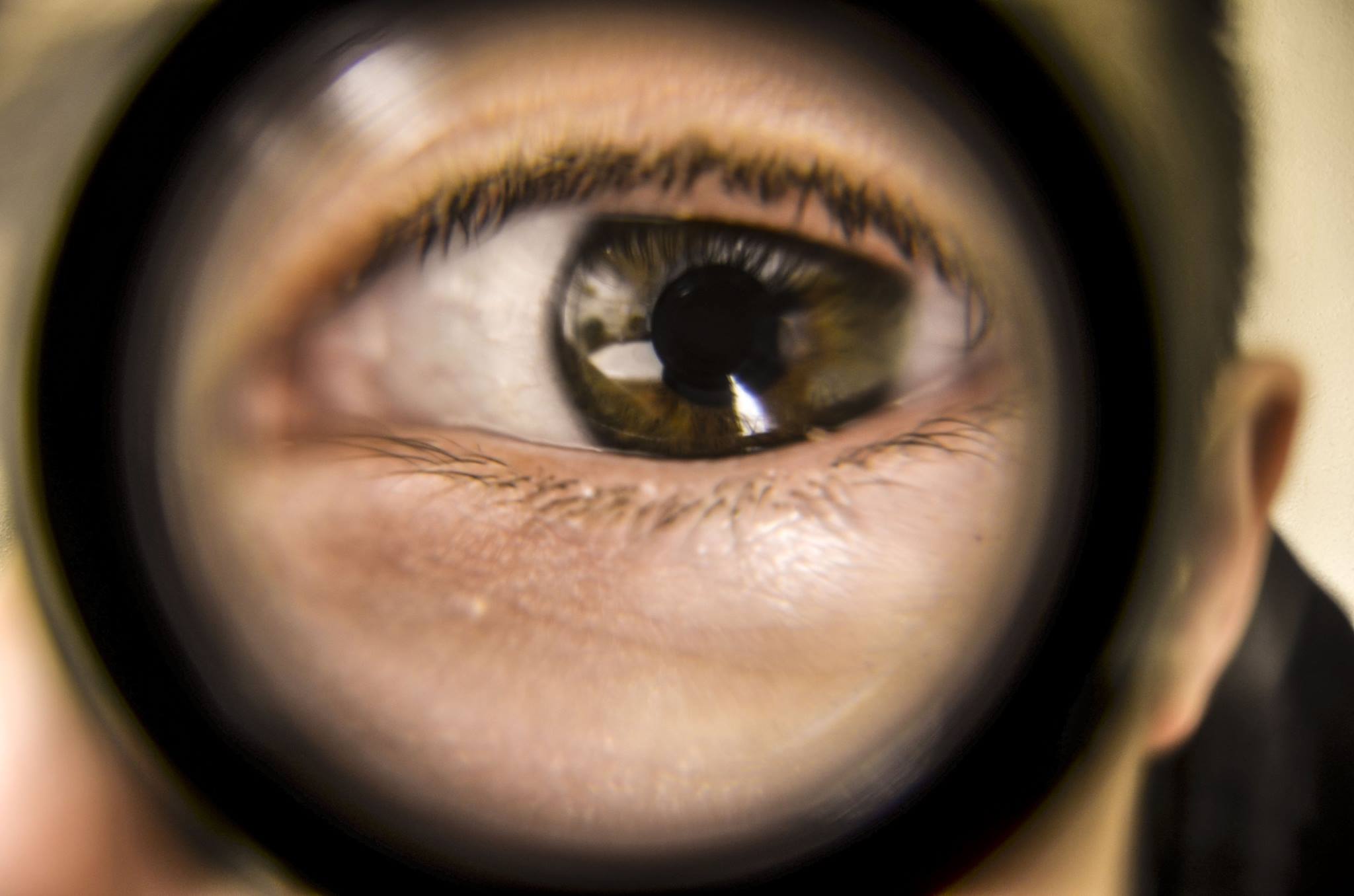
We spend eight hours a day listening to others: clients, colleagues, supervisors. But how often do we truly stop to listen to ourselves?
During the workday, we are immersed in a constant stream of communication: words, requests, emotions. For those in customer-facing roles, empathy isn’t just encouraged — it’s required. We are asked to show understanding, patience, and care, even when we feel drained or when we’re simply having a bad day. In jobs that requires constant active listening, there’s no way to opt out: we must be present, attentive, and responsive.
Over time, we risk becoming prisoners of outward listening, forgetting to direct the same attention toward ourselves. We live in a culture that glorifies constant productivity, where both professional and social pressures push us to squeeze out every last drop of energy.
But the price of this endless race is high: it distances us from ourselves, empties us, and leaves us exhausted. In such intense contexts, both mind and body ask for a pause. Tension, shallow breathing, and lack of energy remind us that we cannot pull the rope forever.
Stress, anxiety, and burnout are the direct results of a culture that has forgotten the value of rest. Yet, stopping is not a failure: it is an act of rebellion against a culture that measures our worth only by productivity. Taking a break becomes an act of self-care, a gesture to protect our mental health and make space for what truly matters.
Still, when we finally allow ourselves that moment of pause, guilt often creeps in — that small voice whispering that we’re not doing enough, that we should go back to “being useful and productive.”
I know that voice well. Sometimes, in the middle of a workday, when I close my eyes for a minute I feel it too. But then I breathe — and remind myself that this minute isn’t lost. It restores my energy for the rest of the day. It’s both my right and my responsibility to take it.
It is precisely in these moments of pause that we can recharge, listen to ourselves, and protect our mental health. A break does not make us less professional or less empathetic: it makes us more human.
Research backs this up: Koo (2023) described rest intolerance as “leisure guilt,” — the guilt or discomfort that arises when time is spent on relaxation rather than work, with guilt as the predominant emotion. People prone to feeling guilt, discomfort, or anxiety during leisure activities tend to prioritize work over rest.
Similarly, Avcı (2025) found out that those who experience this condition often face emotional stress, insomnia, and anxiety, frequently placing work above their own well-being. Research also emphasizes the importance of adaptive coping strategies—conscious ways to manage stress and recharge energy—preventing constant pressure from leading to burnout or exhaustion.
These few studies remind us how essential it is to care for our mental health — and how easily we overlook it until the consequences become impossible to ignore. For this reason, after learning to stop (see post 1: “The Luxury of Pause”), the next step is learning to listen, understanding what we truly need in the moment.
“Cecilia, a minute of pause is fine… but how do I really understand what I need? I’m too tired to know what I want!“. I know, reader, I understand! That’s why we start with simple signals: your body and mind speak to you—you just need to pay attention.
A simple yet powerful technique I have learned during my last years of therapy is the body scan: a mindfulness exercise that helps you reconnect with your body and the feelings stored within it.
Close your eyes, bring your attention slowly to each part of your body: your feet, legs, torso, arms, neck, and head, noticing sensations, tension, or areas of comfort. Breathe calmly and release all judgment: there is no right or wrong, only what you feel in this moment.
Over time, I have discovered that this simple practice helps me reconnect with my body, learning to truly listen to it — to the tension, the stress, and the emotions it quietly holds. Through therapy, I have also learned that this kind of mindful attention isn’t just about relaxation: it’s a way of building dialogue between mind and body, of noticing what needs care before it turns into exhaustion.
Please remember this: listening to yourself is not selfish. It is the best way to be fully present, for yourself and for others.
If you need guidance, you can find below a link to a 5–10 minute guided body scan in each language:
ITA: https://www.youtube.com/watch?v=nZUYVGLTesM
ENG: option 1: https://www.youtube.com/watch?v=6iDKF-TrAfE
option 2: https://www.youtube.com/watch?v=HsmSEZmUT8o
ESP: https://www.youtube.com/watch?v=cnvkcTKU-V8
Bibliography
Avcı, M. (2025). Rest intolerance, emotional distress, insomnia, and adaptive coping strategies: A validation and serial mediation analysis study. Psychiatric Quarterly, 96(1), 1–17. Available at https://doi.org/10.1007/s11126-025-09899-7. (Accessed on Sept 20, 2025)
Koo, H. J. (2023). American idle: An examination of leisure guilt, time use, and well-being (Publication No. 85127228) [Doctoral dissertation, University of California, Irvine]. ProQuest Dissertations & Theses Global. Available at https://escholarship.org/uc/item/6854g2zx (Accessed on Sept 20, 2025)
Leave a Reply